
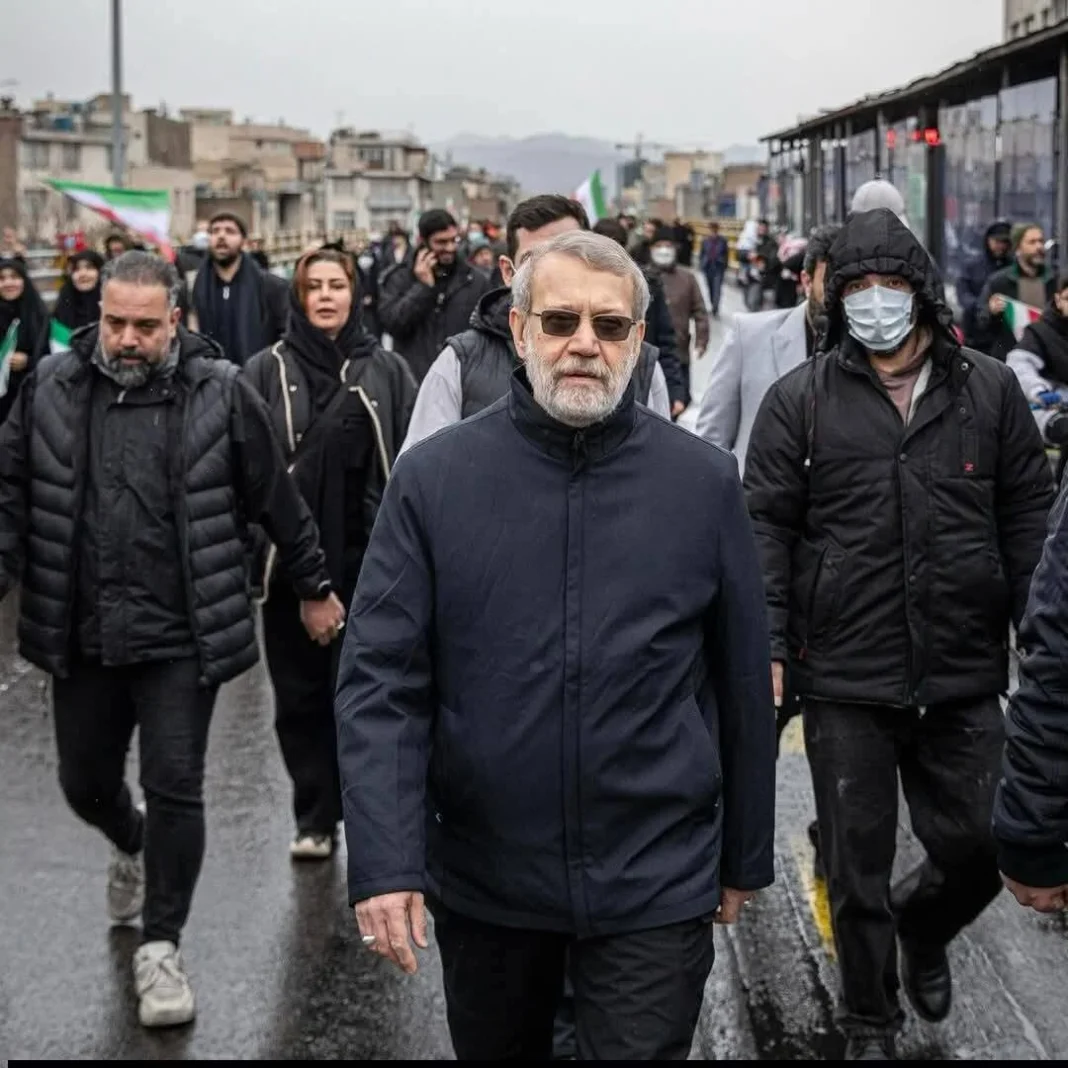


Chief of the Iranian Supreme National Security Council, Ali Ardeshir Larijani, was martyred along with his son, Morteza Larijani, in an Israeli airstrike. This was the biggest loss since the martyrdom of Khamenei (Feb.28, 2026).
Iran’s Supreme National Security Council officially in its condolences message, said:
“A servant of God has returned to God… after a lifetime of struggle, his desire for martyrdom has been fulfilled; he attained the status of sweet martyrdom.”
Early Life and Academic Background
He was born on June 3, 1958, in Najaf (Iraq) in the house of the scholar Mirza Hashem Amoli. Due to pressure from Reza Shah Pahlavi, his father had moved to Najaf. At the age of three, he returned to Iran with his father. Ali Larijani completed his bachelor’s degree in Mathematics and Computer Science from Sharif University. On the encouragement of Morteza Motahhari, he left computer science and pursued a PhD at the University of Tehran on Immanuel Kant. He wrote three books on Kant and taught philosophy. Time magazine described the Larijani family as the “Kennedys of Iran” — Ali being the most distinctive philosopher and scientist among them.
Political Career
In 2005, Khamenei appointed him as the Secretary of the Supreme National Security Council. He negotiated with Europe (Britain, France, Germany) on the nuclear program. Due to differences with Ahmadinejad, he resigned in 2007, but remained connected to the nuclear file. From 2008 to 2020, he served as the Speaker of Parliament (three terms) and secured parliamentary approval of the 2015 JCPOA. In October 2025, he suspended cooperation with the IAEA.
De Facto Leader During the Recent War
In February 2026, after US and Israeli attacks and the martyrdom of Khamenei, Larijani became the de facto leader of Iran. He ran the country for seventeen days. Through Oman’s mediation, he engaged in indirect negotiations with the United States. But when the door to negotiations was shut by airstrikes, Larijani took command of the war. He maintained unity between the IRGC and the army, facilitated Mojtaba Khamenei becoming the Supreme Leader, used the Strait of Hormuz as a strategic weapon, and by closing it, drove Trump into panic.
Leadership of the Quds Day Rally
On March 13, 2026, during the war, despite Israeli attacks and explosions, he led a massive Quds Day rally in Tehran. Alongside President Pezeshkian, Foreign Minister Araghchi, and other leaders, millions came out on the streets. Larijani participated in the rally, described the attacks as “a sign of the enemy’s frustration and weakness,” and said that the courage and determination of the Iranian nation have frightened the US and Israel. The rally expressed full support for Gaza and Palestine, with slogans of “Death to Israel” and “Death to America.” Despite explosions, protesters remained fearless and passionately demonstrated in support of Palestine.
Bold Statements During the War
Larijani gave very bold and courageous statements during the conflict.
Before the war, he said “If the United States or Israel attacks, Iran will have no option but to build nuclear weapons.”
After Khamenei’s martyrdom, Larjani said, “The United States and the Zionist regime have burned the hearts of the Iranian nation. We will burn their hearts. We will make the Zionist criminals and shameless Americans regret their actions.”
On War Strategy, he said, “Starting a war is easy, but it cannot be won with a few tweets. We will not stop until we make you regret this wrong decision.”
On Diplomacy, he said, “We will not negotiate with the United States. We will teach America and Israel an unforgettable lesson.”
On Energy Warfare, he states, “If they attack our power system, the entire region will be plunged into darkness within half an hour — and darkness will provide the best opportunity to hunt American soldiers.”
Address to the Muslim Ummah
During the war, Larijani strongly addressed Muslim countries and governments, expressing deep disappointment that despite the attack on Iran, no Islamic country came to help. Referring to a Hadith, he said,
“Whoever hears the cry of a Muslim and does not help him is not a Muslim.”
He asked, “Is the behavior of Islamic governments not against the command of the Prophet ﷺ? What kind of Islam is this?” He further added that the unity of the Islamic Ummah could guarantee the security, development, and freedom of all countries.
Response to the Bounty
In response to Israel reportedly placing a $10 million bounty on his head, Larijani gave a firm and courageous reply on his Twitter (X) account:
“The timeless message of Imam Hussain (RA) still lives today:
‘In my view, death is a blessing (Sa’adat), and living with oppressors is nothing but a painful imprisonment.’“