
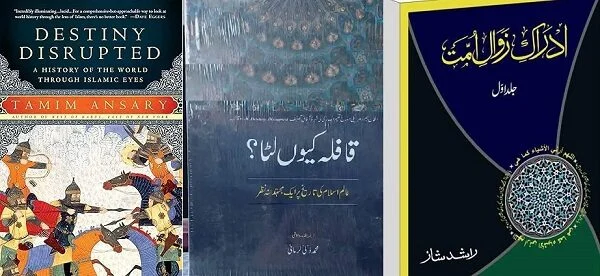


A critical question arises, at a time when Muslims stood as the undisputed leaders of the world in science, technology, and diverse fields of knowledge, why did they suffer such a cataclysmic and humiliating defeat at the hands of the Mongols, a people perceived as ignorant, unrefined, and technologically primitive?
Similarly, one must examine the case of Al-Andalus (Spain). At that time, it was the global epicenter of arts, sciences, and cutting-edge technology. Why did such a sophisticated society ultimately succumb to a civilization whose monarchs were mired in ignorance? Historical accounts even suggest that rulers like Ferdinand II of Aragon and Isabella I of Castile neglected basic personal hygiene, such as bathing, for long periods and were governed by blind superstition and archaic traditions. What, then, was the true catalyst for this collapse?
In stark contrast, a reverse phenomenon demands explanation, during the era of the Prophet Muhammad (PBUH), the Rashidun Caliphs, and subsequently the Umayyads, Muslims were materially, scientifically, and technologically far inferior to the titanic empires of Rome (Byzantium) and Persia (Sassanids). How, then, did a people with such limited material resources manage to systematically dismantle and subdue the militarily superior, technologically advanced, and economically prosperous superpowers of their age?
These questions are directed to Rashid Shaz, author of Idraak-e-Zawaal-e-Ummat, and Zaki Kirmani, translator of Qafila Kyun Loota (the Urdu version of Destiny Disrupted by Tamim Ansary), as well as to leading intellectuals of Islamic movements and national organizations. Because, Afghan origin US writer Ansary too reiterates two main reasons of the decline of Muslim civilization. First, a shift away from independent reasoning (ijtihad), which slowed scientific and intellectual progress, and second, the rapid rise of the West, driven by the Renaissance, Reformation, and Industrialization, which left the Muslim world behind.
However, this explanation is incomplete because major defeats like the Mongol invasions of the Islamic world and the fall of Al-Andalus were driven more by political fragmentation, military factors, and external shocks than by any decline in scientific and intellectual progress. Moreover, early Muslim successes during early Islamic age against their times superpowers such as Byzantine Empire and Sasanian Empire show that iman, unity, leadership, and morale, not scientific or technological superiority alone, are the decisive forces in the rise and fall of civilizations.
In his influential treatise “The Secret of Real Power” (Quwwat ka Asal Raz), great Islamic scholar of twentieth century, Maulana Sayyid Abul A’la Maududi presents a profound philosophical analysis of the rise and fall of the Muslim Ummah. He argues that the historical ascendancy of Muslims was never a product of numerical strength or superior weaponry, but was fueled by a “Moral Force” rooted in absolute Tawhid (the Oneness of God). To Maududi, the Muslim Ummah is a purpose-driven community whose power is tied strictly to its adherence to Islamic principles.
He famously uses the metaphor of a building, explaining that while the world sees only the “external decoration”—the wealth, palaces, and military might—the true survival of a nation depends on its “unseen foundations” of integrity, piety, and sincerity. If these foundations are eaten away by the “termites” of moral corruption and hypocrisy, no amount of modern “paint or polish” can prevent the structure from collapsing under the weight of history.
He further clarifies that material resources are merely “instruments” (Asbab), while the true “Source” (Musabbib) is Allah. The decline of Muslims, in his view, began the moment they started fearing the “Spider’s Web” of worldly powers more than the Creator. Maududi emphasizes that a nation of “decorated corpses”—people who possess modern degrees and technology but lack a living conscience—can never lead the world. He asserts that material progress is a natural byproduct of a strong moral character; a disciplined, God-fearing, and honest society will inherently become scientifically and politically superior.
Therefore, the “Fall” is not a result of a lack of resources, but a “Moral Bankruptcy” that renders a nation spiritually hollow. To rise again, he insists that Muslims must move beyond the superficial imitation of Western civilization and return to the “Original Source” of their strength: an unwavering faith that manifests as superior conduct in every walk of life. In his original words, he suggests that when a believer’s character aligns with the Truth, they wield a power that “no material force on earth can subdue.”