
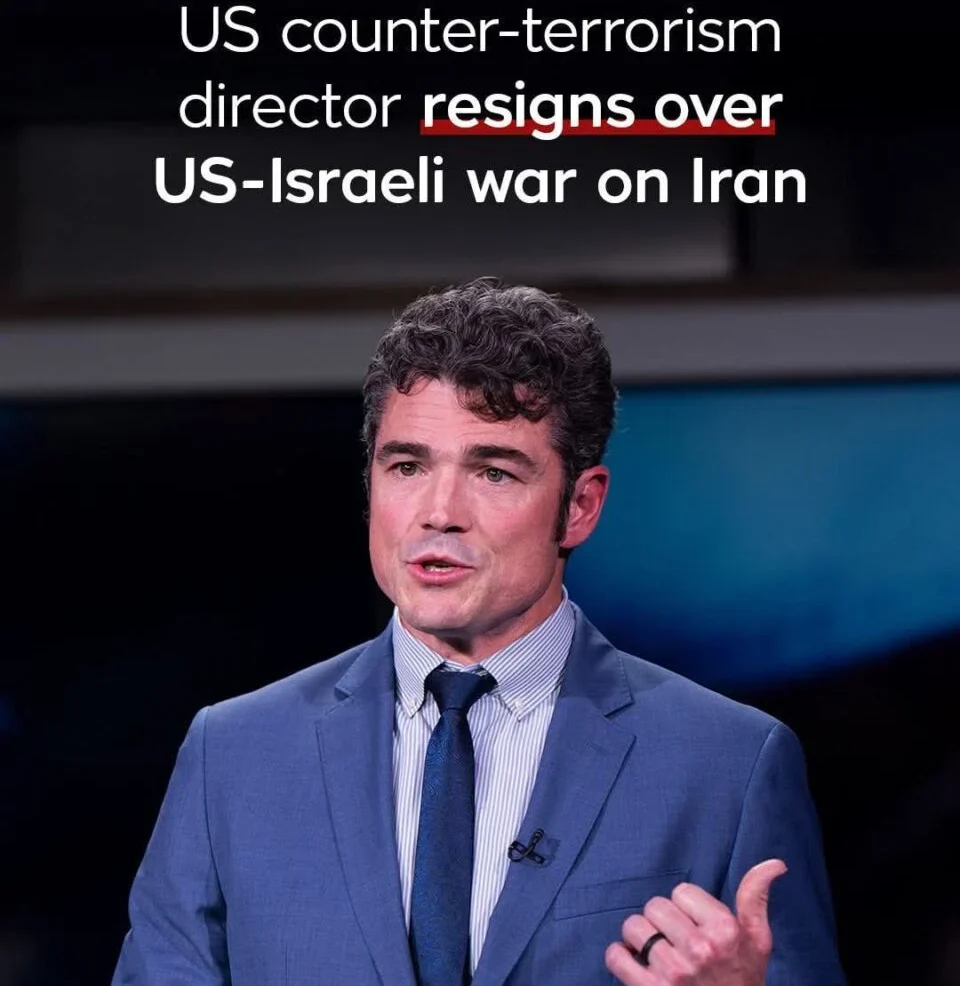


The resignation of a senior U.S. intelligence official, Joe Kent, over the war against Iran has raised serious questions of the conflict . When a high-ranking official sitting within the United States itself is saying that this war was not based on any real threat but was initiated due to Israeli pressure and lobbying, it means that Donald Trump has now been completely exposed.
In his resignation letter, Kent clearly wrote: “I cannot support this war by going against my conscience… Iran was not an immediate threat to the United States.”
He further said: “This war has been initiated under pressure from Israel and its powerful lobby in the United States, not out of any genuine defensive necessity.”
These statements themselves expose the reality behind the narrative of this war.
Kent’s step is a living example of courage and conscience—he chose to give up his position but refused to become part of injustice and a false narrative. It is unfortunate that while a voice of truth is rising even from within the United States, some rulers—especially in parts of the Arab world and Pakistan—remain busy pleasing “Uncle Sam,” that is, Trump, showing neither a sense of honour nor concern for the wider Muslim Ummah.
Such resignations from within security or intelligence establishments are rare and often signal deep internal disagreement over policy decisions. Historically, dissent within U.S. institutions—whether during the Vietnam War or the Iraq War—has sometimes revealed gaps between official justifications and internal assessments. Allegations of external lobbying influencing foreign policy, particularly involving Middle Eastern geopolitics, have long been debated in academic and political circles, though they remain highly contested and politically sensitive.
The claim that Iran posed “no immediate threat” contrasts with official U.S. positions in various periods, where Iran has been described as a strategic adversary due to its nuclear ambitions, regional influence, and support for allied groups. However, critics of military escalation often argue that intelligence assessments are sometimes interpreted or presented in ways that align with political objectives rather than strictly defensive needs.
Kent’s resignation, as described, therefore adds to a broader pattern where individual officials publicly distance themselves from decisions they view as ethically or strategically flawed, highlighting tensions between policy, intelligence, and personal conscience.