
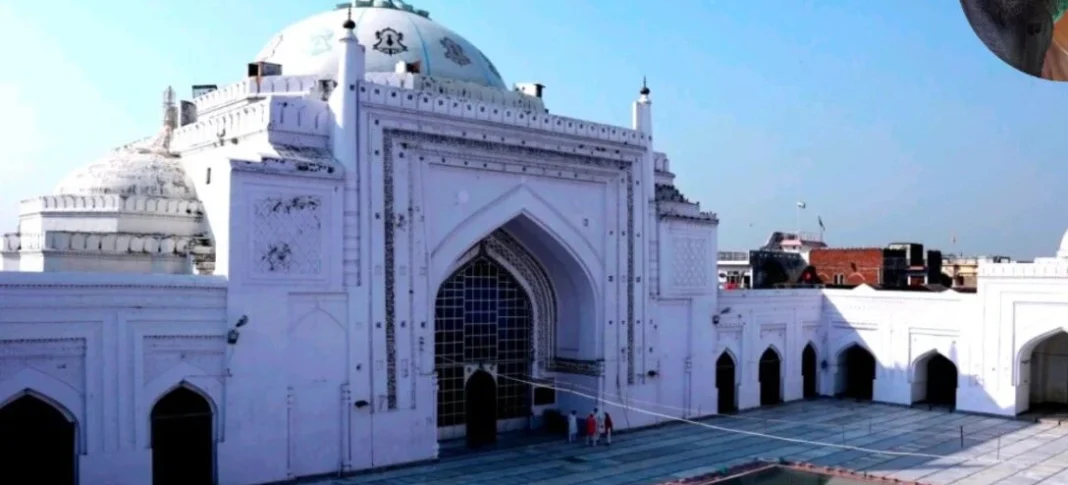


A video surfaced from Uttar Pradesh on social media on March 30, 2026. According to reports, in the Sitapur district of Uttar Pradesh, government authorities demolished the Hazrat Umar Farooq Mosque—located in the Basaiya Tola neighborhood of Laharpur town—early on the morning of Monday, March 30. The operation was carried out following an order from the Sub-Divisional Magistrate (SDM) court, supported by a heavy deployment of police and administrative personnel.
Chronology of the Demolition
According to local accounts and a statement by Abdul Matin Mazahiri, Assistant General Secretary of Jamiat Ulama-e-Hind (Sitapur), the mosque had been a target for months. Although legal efforts were made from Sitapur to Lucknow, and a three-month stay was initially granted by the Lucknow High Court with instructions for the District Magistrate (DM) to resolve the matter, the Sitapur DM reportedly finalized the case in just 20 days.
The administration has been accused of “procedural fraud,” as the dismissal of the case was allegedly kept secret even from the mosque’s legal counsel. While a one-week reprieve was briefly secured, the authorities moved in on March 29 to issue a notice for the removal of belongings. Although they announced a 10:00 AM start for the following day, the operation actually began under the cover of night. At 5:00 AM, exactly at the time of the Fajr Adhan, five bulldozers (JCBs) and fifteen tractor-trolleys arrived. Demolition began at 5:30 AM, right at the time of prayer, starting with the gate before machines entered the prayer hall.
Legal Context and Allegations
The Gram Sabha had filed a complaint in the Tehsil court asserting that the land is officially designated in government records as a public pond and graveyard. However, historical records from 1928 suggest the land was originally private property belonging to Muslims, adjacent to their settlement. While it was later classified as government property, it remained in the possession of the community and was registered with the Waqf Board.
The mosque was built on a section of the graveyard that contained no graves. The administration ultimately declared the construction illegal, justifying the bulldozer action by claiming that permanent structures cannot be built on government-classified graveyard land, even while acknowledging it was not private encroachment.
Local History and Grievances
The foundation of the mosque was laid in 2012 by esteemed scholars of Laharpur. The first Friday prayer of Ramadan that year was led by Mufti Numan Sitapuri, a Mufti of Darul Uloom Deoband. Over the years, the mosque grew to include modern facilities, a guesthouse, and lush greenery, serving as a vital stop for travelers on the main road. Prominent figures such as Maulana Hayatullah Qasmi and Mufti Sajid Qasmi had visited the site.
Maulana Abdul Rahman, associated with the mosque, remarked that the matter appears to be political in nature. The local community has expressed profound reservations and described the day as a “Black Day.” Abdul Matin Mazahiri stated that the event is a “stain that will continue to shake our conscience,” as the community’s helplessness was met with the “slap of administrative indifference.”
A Growing Pattern of Demolitions
The incident is being viewed by many as part of a troubling trend of mosque demolitions following the Babri Masjid verdict. In this context, prominent religious elders and leaders—known for their commitment to truth—had previously issued a stern warning: they cautioned that the Babri Masjid case served as a symbolic dam. They warned that if this dam were ever to break, no place of worship would remain safe from similar actions. The demolition in Sitapur is seen by many as further evidence that this protective barrier has indeed been breached.